Framing Guide
Charcoal is a delicate medium. To preserve the depth and texture of your piece, I choose not to use fixative sprays, which can alter the original appearance and flatten the intricate details and rich values of the drawing. Because the surface remains workable, it is prone to smudging and requires specialized care during the framing process.
-
The Mat & "Dust Trough"
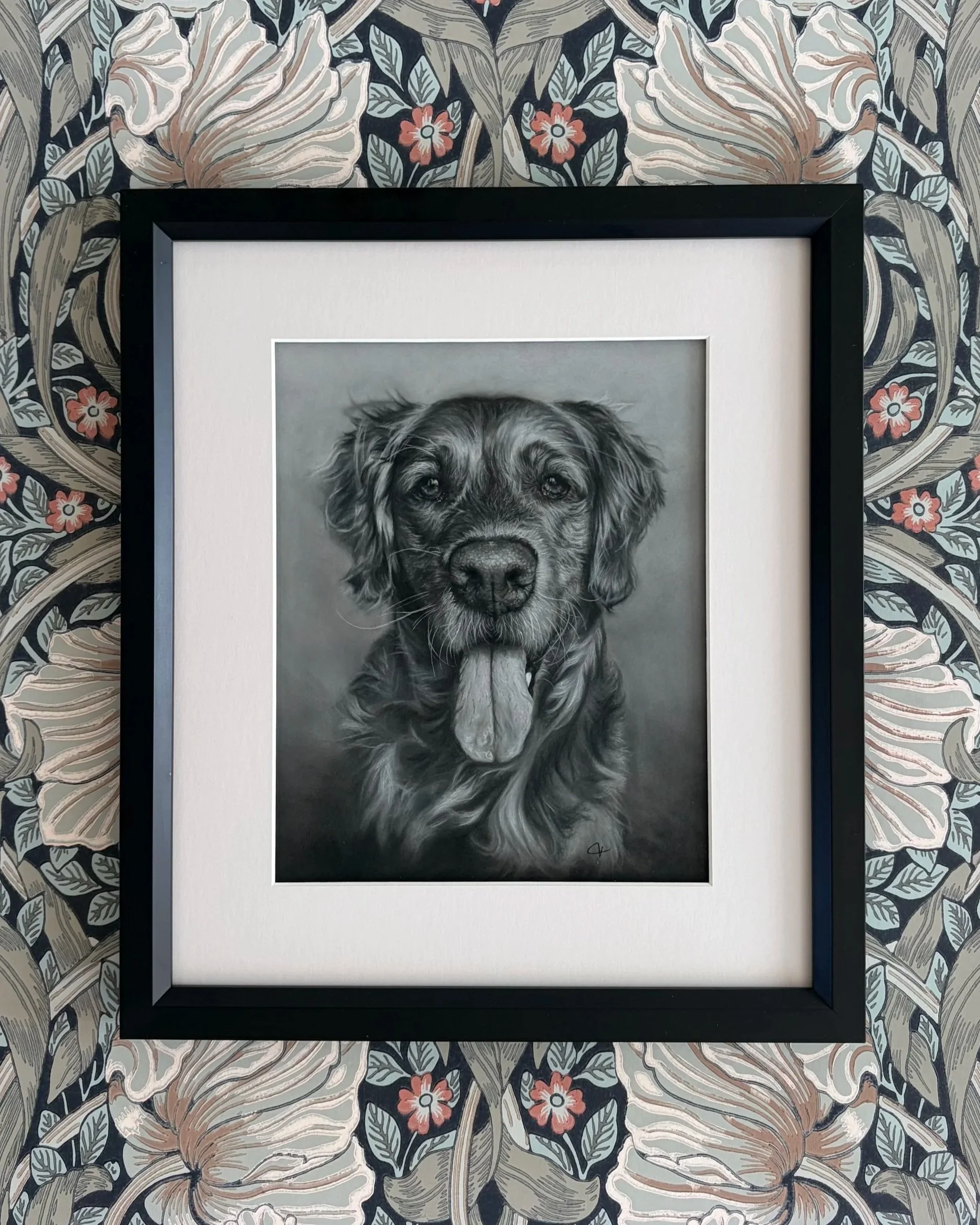
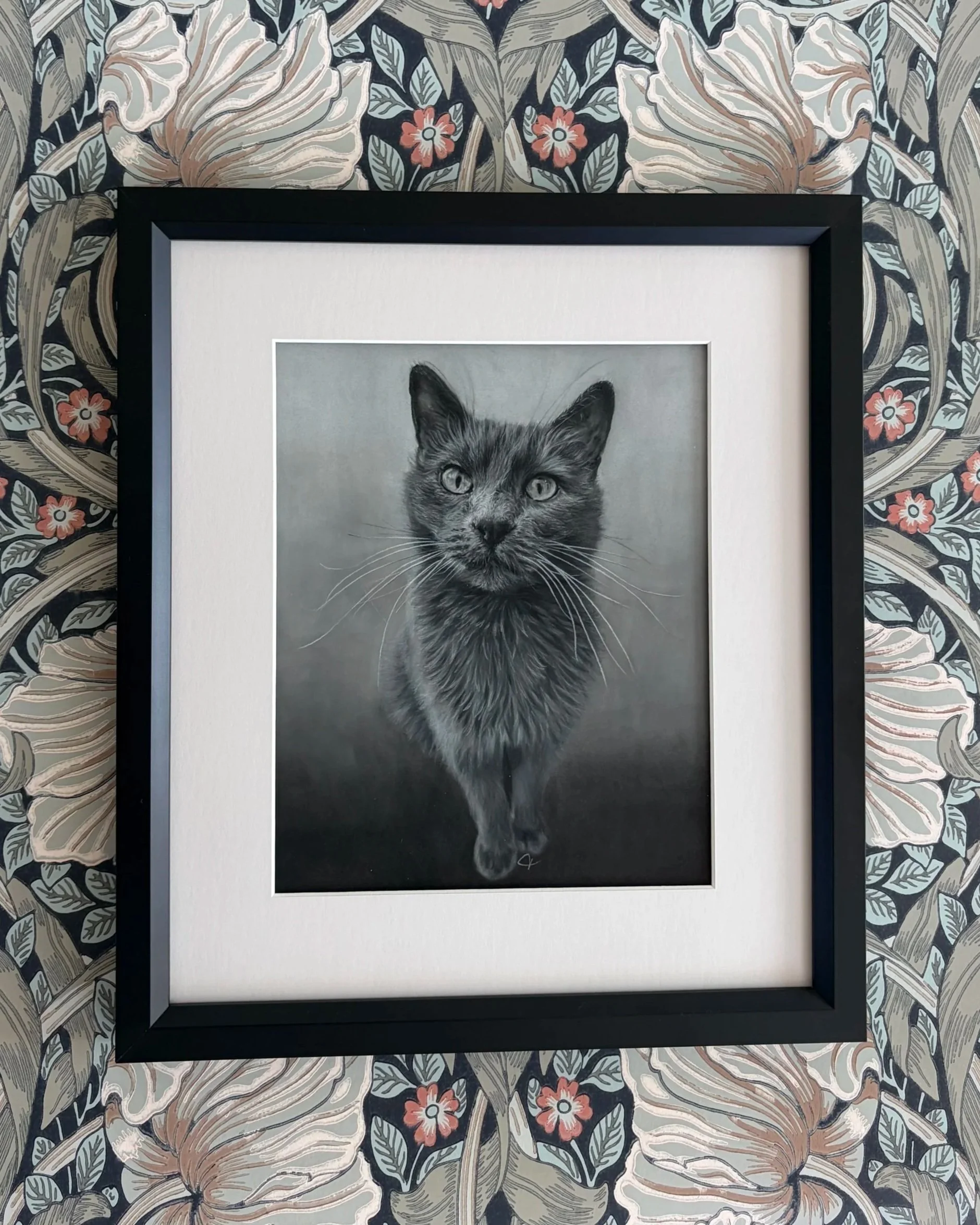
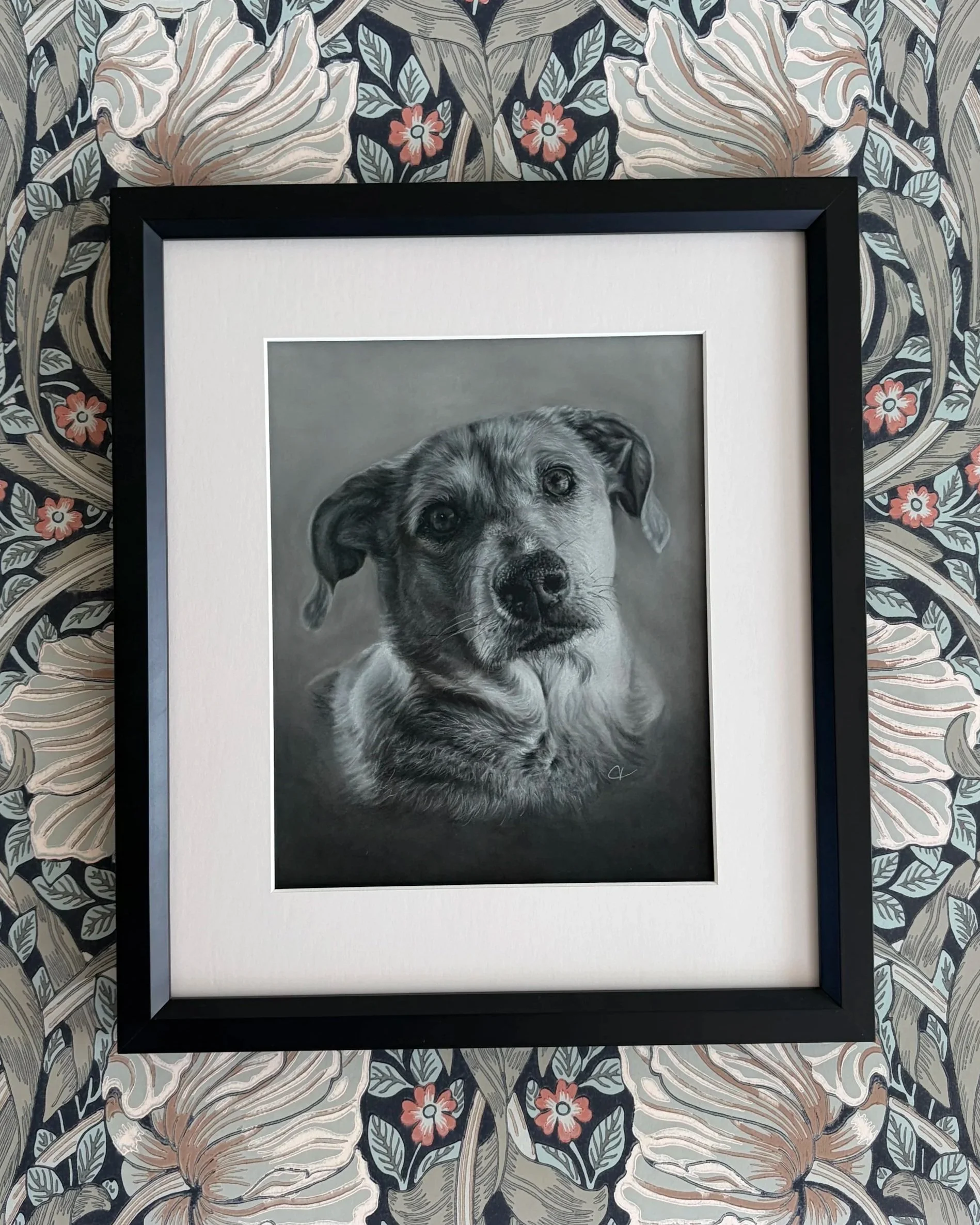
Because no fixative is applied, your drawing must be framed with a mat to ensure the glass never touches the surface of the art. Each piece is professionally mounted to archival foam core and protected with a light grey mat that complements the charcoal.
I also include a "mat lift.” This creates a subtle gap between the artwork and the mat, functioning as a "dust trough." Over time, tiny particles of charcoal may naturally flake off; this gap allows them to fall out of sight rather than collecting on the surface of the mat.
-
Choosing the Right Glass
Static electricity can pull loose particles of unfixed charcoal onto the glass. Acrylic (Plexiglass) is generally more prone to static than traditional glass. For the best results, I recommend Museum Glass. While it is a premium investment, it is truly the gold standard for charcoal drawings. It provides:
Maximum Clarity: Virtually eliminates reflections so you can see every fine detail.
UV Protection: Safeguards your investment from fading over time.
-
The Certificate of Authenticity
Each commission includes a Certificate of Authenticity. To ensure it is never separated from the art, you can ask your framer to adhere the COA directly to the dust cover on the back of the finished frame.